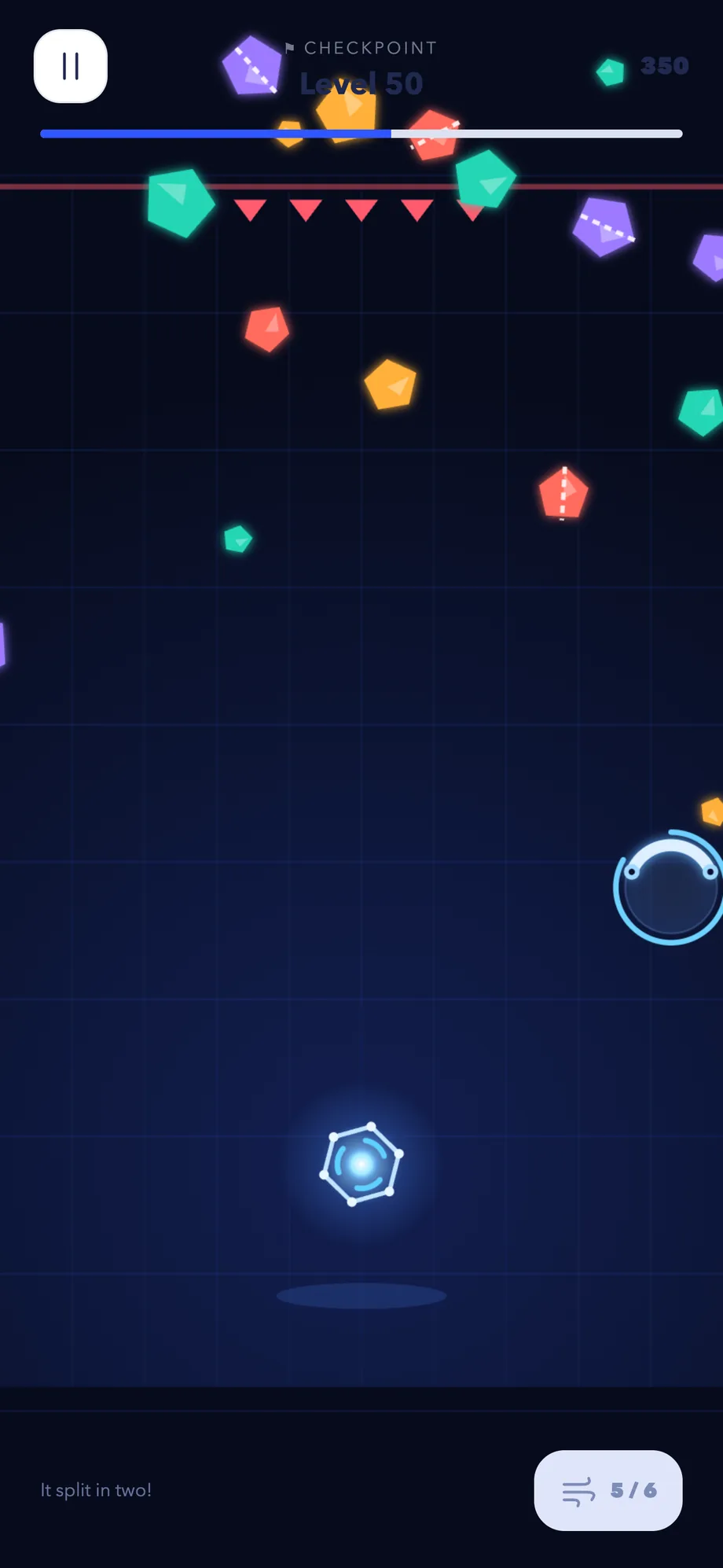
A one-thumb arcade game about never standing still — 600 levels, all offline.
iOS · AndroidPlay

A twelve-racer obstacle race through five candy worlds. You are Pip, a drop with a bow, running a ribbon of cake and candy that is trying to knock you off it — five worlds, 12 on the start line, and a place on the board at the end of every run. It plays offline.
Not on the stores yet. Submitted to the App Store as 1.0.0 (22) and on a closed Google Play test as 1.0.0 (18). Not publicly listed on either store yet, so there is no download here.
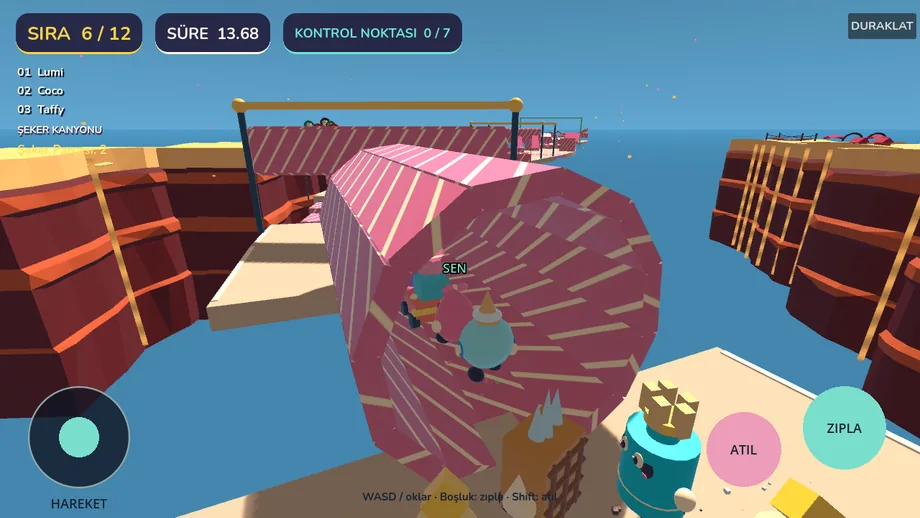
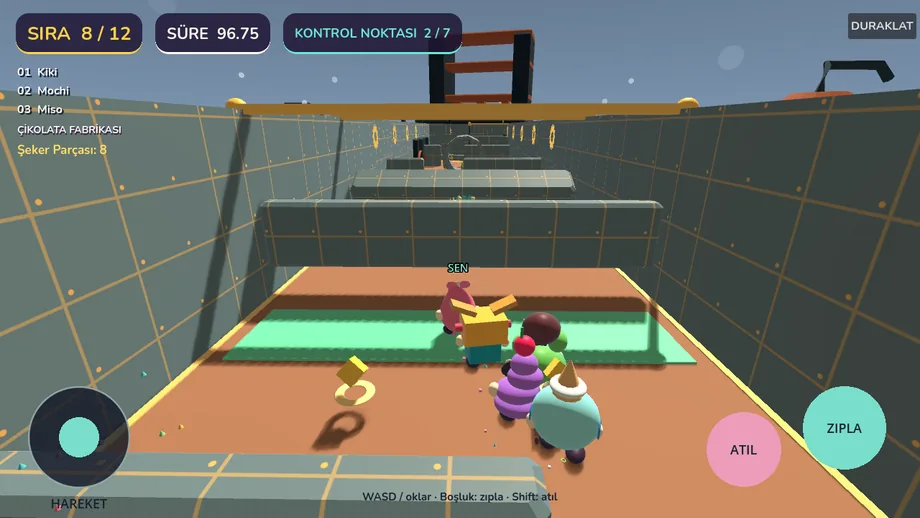
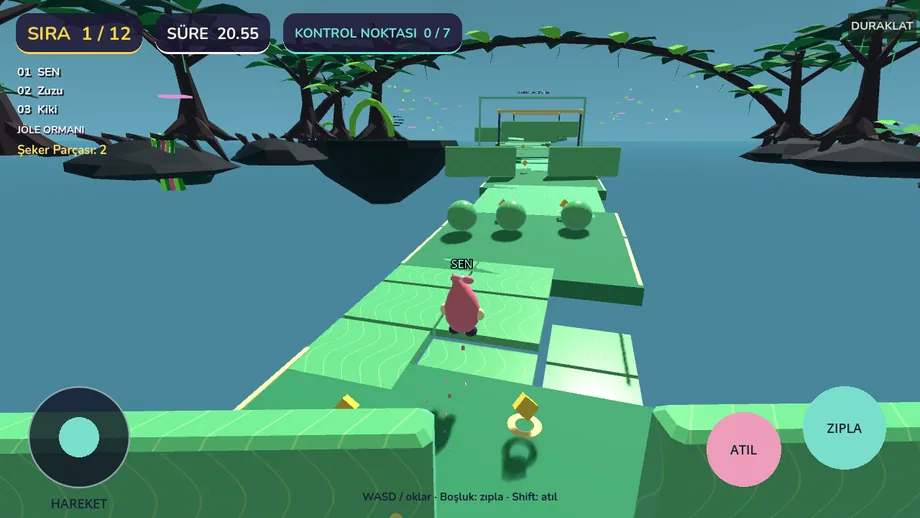
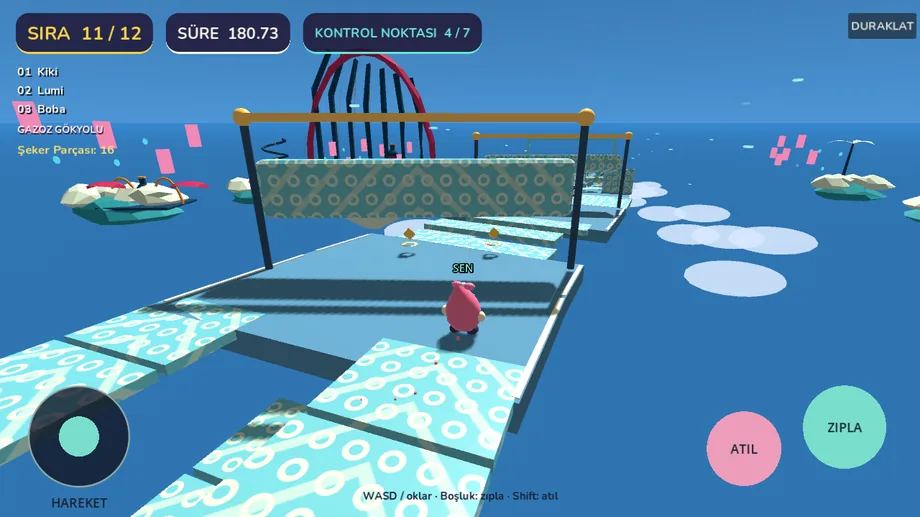
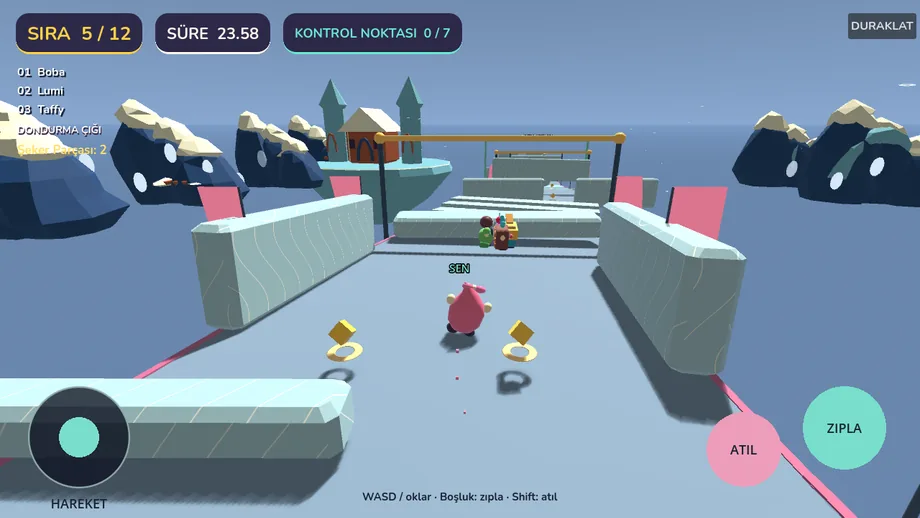
Real product assets
A browser race on Candy Drop’s own material, not the Godot build — the loop around it is written for the web. What it runs on is the game’s: Candy Canyon’s nine colours, Pip’s five skins, the 11 racers by name, locomotion at 8.5 m/s with a 2.8s dive cooldown that keeps a dive a lunge rather than a sprint, the rule that every 30th Candy Bit is worth 50, and the reward table that pays 100 Candy Cash for first and 20 for twelfth. The HUD speaks the game’s own words in the six languages it and this site share; Japanese and Arabic, which the game does not ship, are translated for this site. Deliberately different: the course is 420 m where the shipped world is longer, the deck has no gaps to fall through, and the bots are paced rather than running the player’s controller through a 3D physics step as they do in the game.
Feel the loop in under a minute: steer, jump, dive, collect, and read the place you finished in.
Why it exists
A racing game where the race is the obstacle course, not the vehicle. There is no kart and no drift: you run, you jump, you throw yourself forward in a dive that is a lunge rather than a sprint, and the eleven racers beside you are running the same controller you are. The interesting decision is never which button, it is whether the shorter line past the next hazard is worth the fall.
What it does
Candy Canyon, Choco Factory, Jelly Jungle, Soda Skyway and Ice Cream Avalanche. Each is a run of decks and gaps over open water with its own hazards, its own palette and its own music, and each keeps your best time separately.
Bits are strewn along the course and beside every checkpoint. They are worth 1 each — except every 30th in placement order, which is worth 50, drawn 1.3x larger with a halo so you can see it from far enough away to decide whether the detour is worth losing a place for.
Candy Cash by finishing place, from 100 down to 20, plus everything you picked up. A Daily Streak pays for coming back, and the streak is settled by the server rather than the phone's clock — so changing the date on the device earns nothing.
The race itself needs no connection: the course, the bots and the rewards are all local, and the game picks up the phone’s own language. It goes online only for the global board, the daily streak and, where a store is configured, purchases and ads.
How it was built
Every racer on the course — all 12 of them — is the same RacerController with a different source of input. There is no rubberbanding, no catch-up speed and no teleport: a bot that is ahead of you is ahead because it took a better line, and one that falls loses the same seconds you would. That is a harder way to build a field, and it is the only way the place you finish in means anything.
Where it stands
Candy Drop 1.0.0 has been submitted to the App Store as build 22 and is on a closed Google Play test as version code 18. Neither store lists it publicly — a bundle lookup returns nothing and the Play page is a 404 — so there is no download link on this site, and there will not be one until a store serves it. The five worlds, the 12-racer field and the reward table above are read from the submitted build.
We do not publish download counts, ratings or revenue figures for any product. Nothing here has been on a store long enough for one to mean anything. Privacy information for Candy Drop.
Elsewhere in the studio