Novemade
Services

Internal software that is still usable in year three.

Dashboards, admin systems, APIs and the workflows between them. The test we apply is not whether it demonstrates well, but whether somebody who did not build it can operate it, extend it, and find out why it did something last Tuesday.

What people arrive with

The problems that bring somebody here.

A spreadsheet became the system

It works, until two people edit it, until a formula is pasted over, until the one person who understands it is away. The replacement has to be at least as fast to use as the spreadsheet was, which is the requirement most internal tools miss.

Three tools hold one process

The work lives in one system, the money in another, the customer in a third, and a person moves data between them. That person is the integration, and they are the part that does not scale.

You have software nobody dares change

No tests, no documentation, no staging, and a deploy that is a person on a Friday. The first deliverable in that situation is not a feature; it is the ability to change something safely.

What the work includes

Including the parts nobody puts on a services page.

Scope is where a project is decided, so this list is specific rather than reassuring.

  • Dashboards and admin systems

    Built around the decisions somebody actually makes, with every figure derived from its source rather than typed in. A number kept in step by hand will eventually be wrong, and will look exactly as confident as a correct one.

  • APIs and data flows

    Typed boundaries, explicit error shapes, and the same request producing the same result. Where data moves between systems, the move is a job with an identity rather than a script somebody runs.

  • Workflows with states, not statuses

    A record that can be in any combination of seven booleans has no state machine, and every bug in it is a combination nobody considered. Naming the states is usually the design work.

  • Tests that encode the rules

    Not coverage for its own sake. The tests worth writing are the ones that fail when a business rule is broken, which means they double as the place the rules are written down.

  • Operability, handed over

    Configuration through environment variables and nothing else, no secret in a repository, a documented way to run it locally, and a build that fails rather than shipping something half-checked.

How it runs

The same loop our own products go round.

Not a process diagram written for this page. It is the production loop the studio already runs, which is why it has a measure step and a human gate in it.

  1. 01ResearchSignals and a per-product idea bank, scored for relevance before anything is made.
  2. 02DesignThe product decides its own voice, claims and boundaries. The system fills them in.
  3. 03BuildAssets, narration and captions assembled from each product’s own material.
  4. 04LocaliseEvery string in every language, with parity between catalogues checked rather than assumed.
  5. 05TestAutomated gates, then a person. Nothing reaches a queue unreviewed.
  6. 06PublishPer-platform packaging, with publishing deliberately held behind human approval.
  7. 07MeasureRelease and performance signals return to where the work was made.
  8. 08LearnWhat worked on one product is readable by the next one that asks.
  9. 09ImproveThe fix lands in the shared system, not in one product’s copy of it.

Evidence

Our own products, not a client list.

Everything shown as evidence on these pages is a NOVEMADE product - our idea, our money, our name on the listing. There is no client logo wall here, no testimonials and no case-study metrics, because there have been no clients to take them from. What there is instead is software you can open.

LIVE

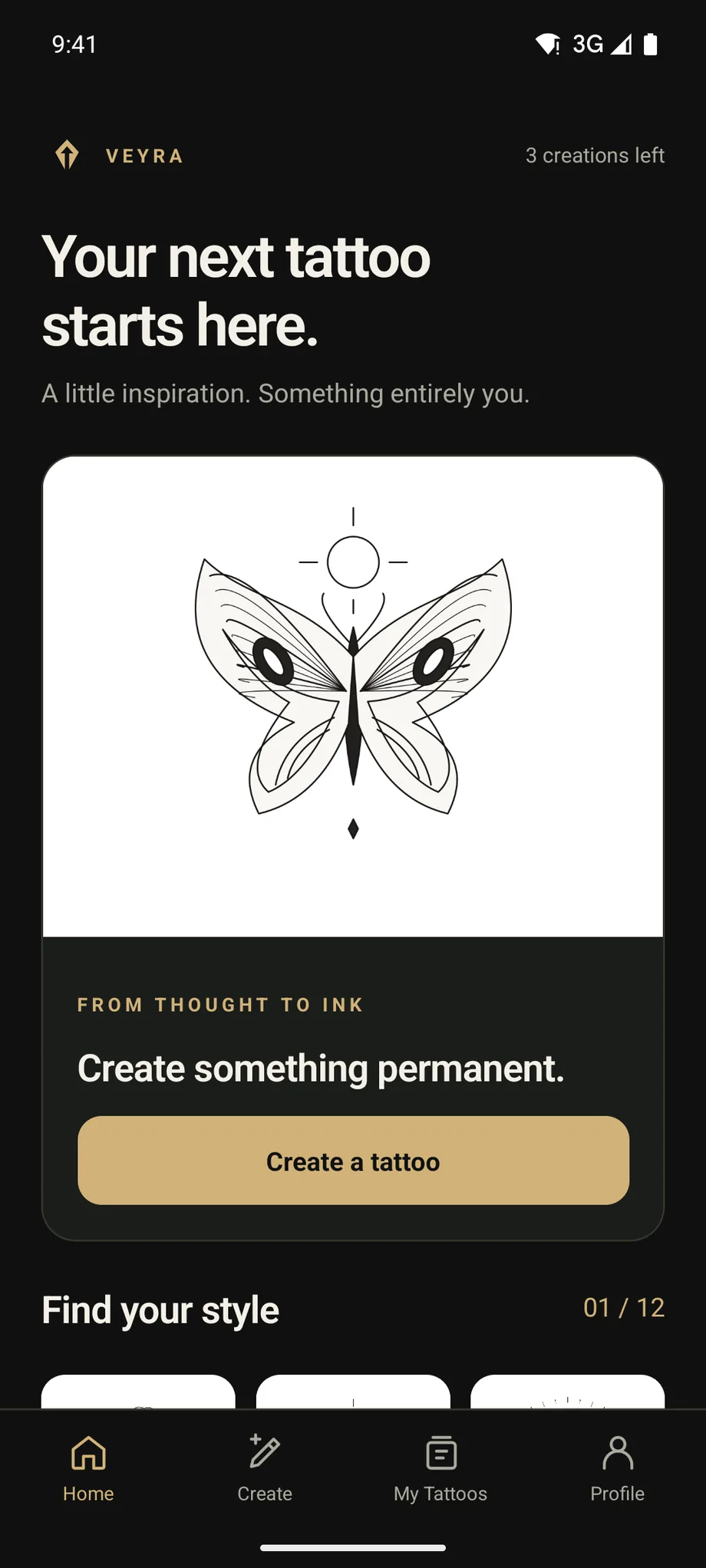
Design a tattoo, turn it into a working stencil, and see it on your own skin first.

iOS · AndroidTry it
Veyra — home, with one saved design and the free allowance on show: three creations left

Check it yourself

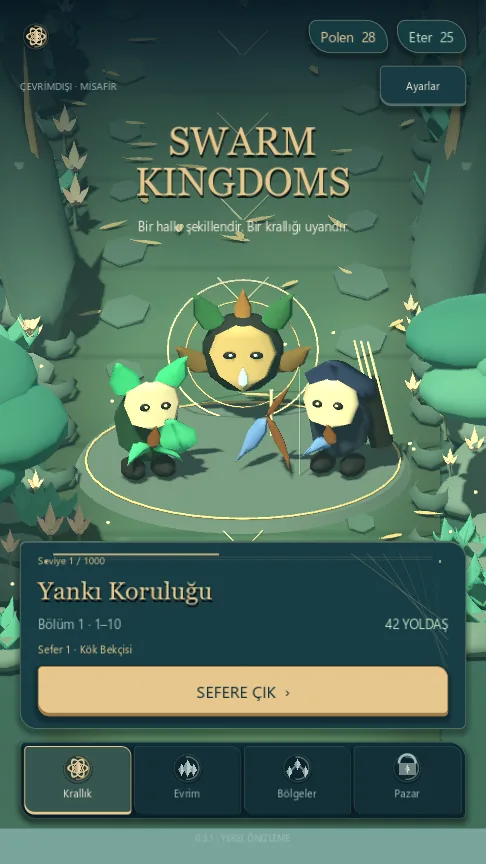
The fight is the game’s. These are level 1 of 1000, with the hit points, damage, counts and timings the shipped build reads out of its own campaign file; the shrine offers the two routes that level really offers, and the Bloomwell’s +24 kin and the Thorn Oath’s 1.35× attack are its own balance numbers. The Warden is boss family 1 of 50, with its real root and nova patterns and its real colour, and the grove is drawn in the palette region 1 declares. Every word is the game’s own string, in any of its 10 languages. What is rewritten is the combat loop itself: Godot’s web runtime is 10.3 MB before any content and this campaign is another 5.9 MB, so a real build would be roughly fifty times the weight of anything else on this site.

Play Swarm Kingdoms

Goes further

A thousand levels, and nobody placed one of them by hand

Ten regions, a hundred difficulty tiers and fifty boss families, generated from a model — and the acceptance run that had to prove every route through it is winnable.

Read the case study

Where this stops

What we do not do.

We publish no client names and no case-study numbers, because the work shown on this page is our own and there are none to publish. We also do not staff a seat on somebody else’s team by the month - this is project work with a defined end and a handover that includes the keys.

Collaborate

We are not for hire. We are open to the right partnership.

Publishing, partnerships, investment, or a technical conversation about how we build. Tell us which one and we will skip the rest of the form.