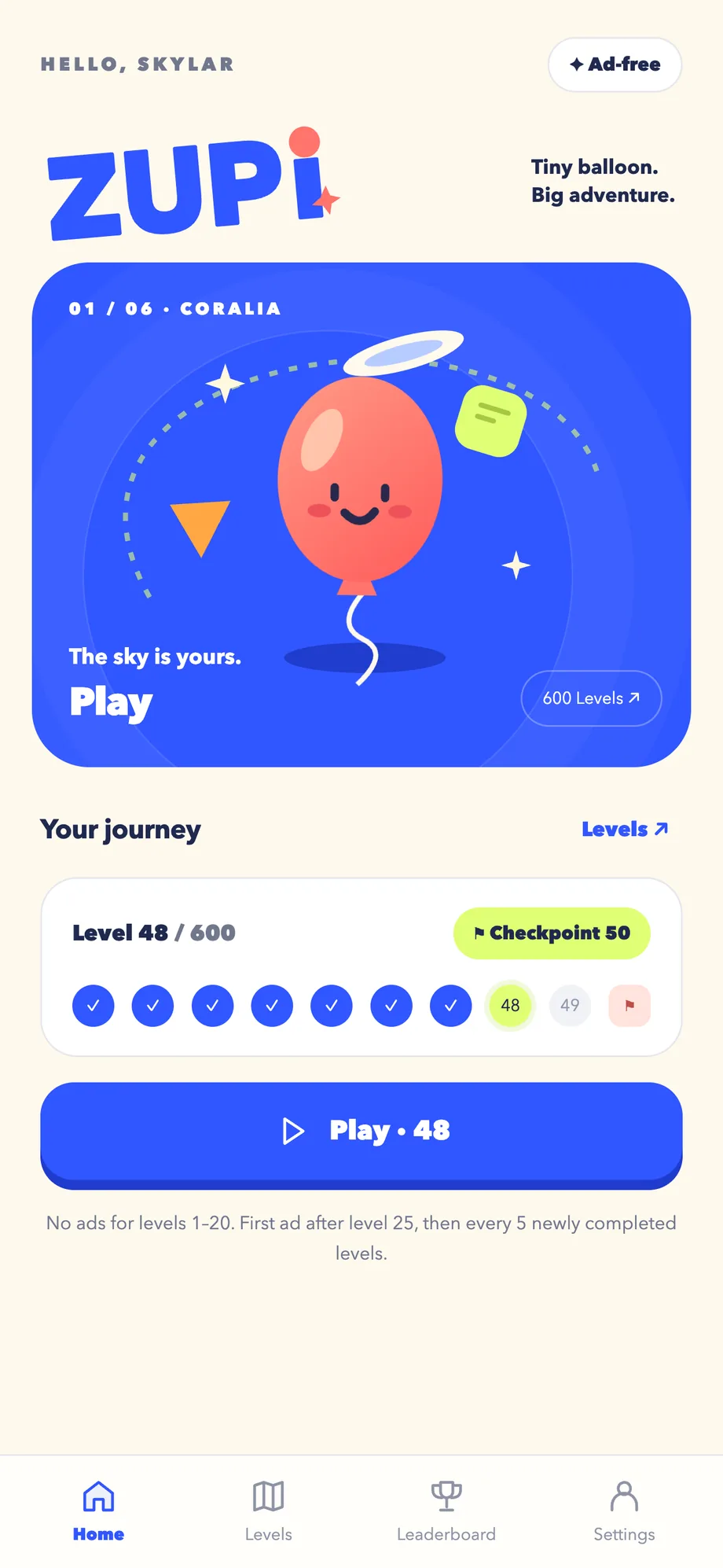
A one-thumb arcade game with 600 hand-built levels and no waiting.
iOS · Android · WebTry it
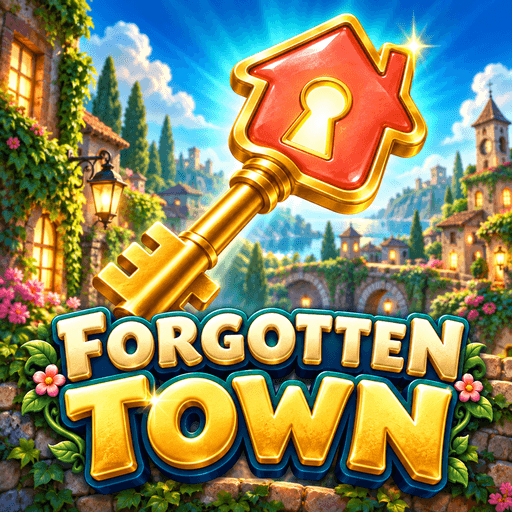
Tap a generator, merge what it gives you up a chain, and hand the result to whoever is asking. Each order repairs one more piece of the town, and the repairs uncover a story told in five cases. 100 orders across five areas, offline, with no account.
Not on the stores yet. An accepted release candidate. Not submitted to either store yet.
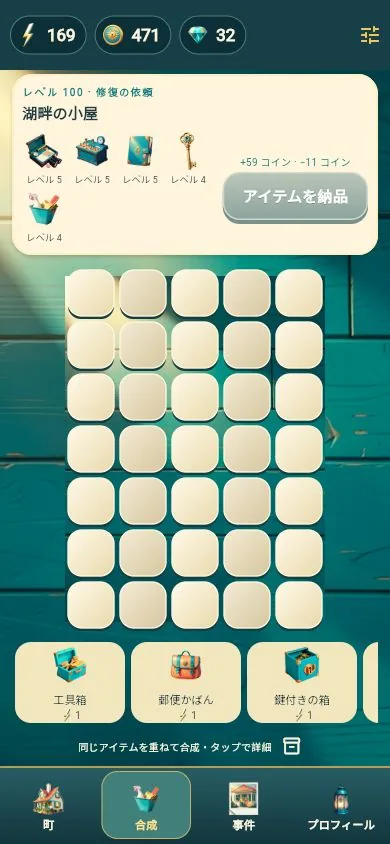
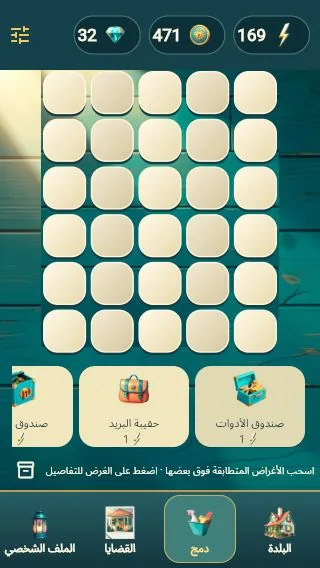
Real product assets
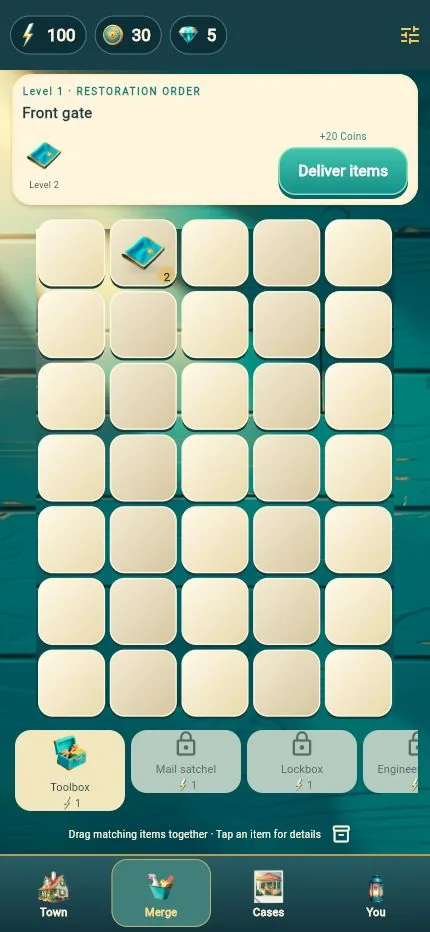
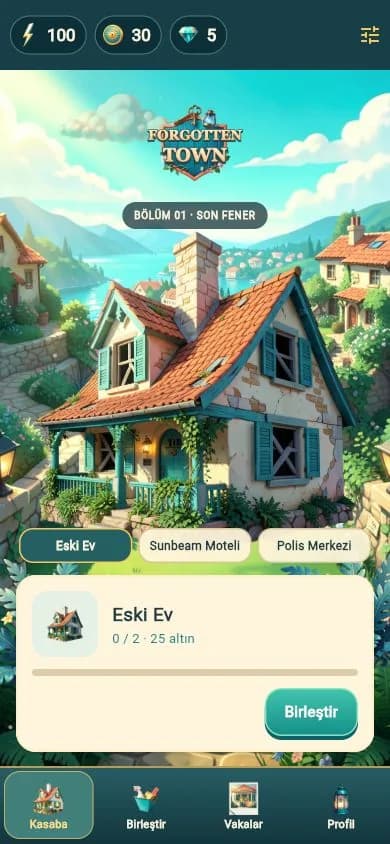
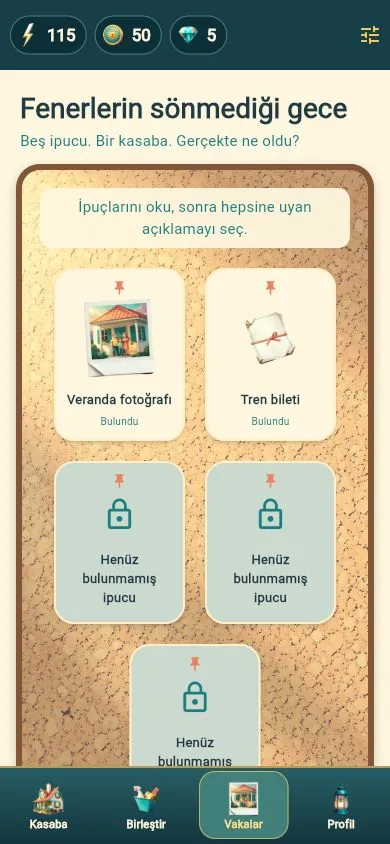
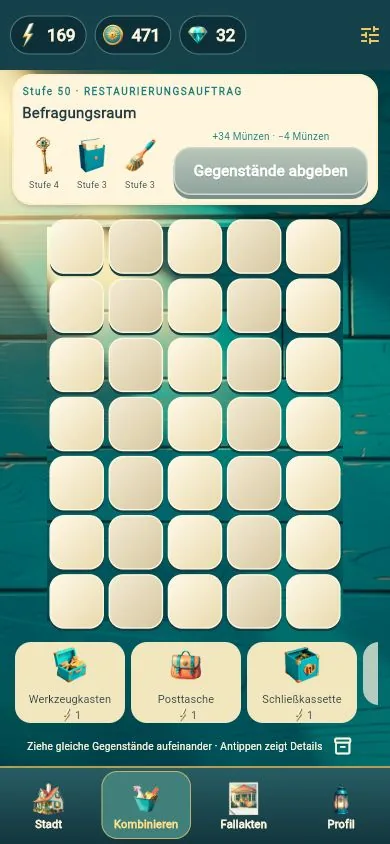
The pictures and the numbers are the game’s. Every sprite is one of its own rasters, the board is its 5-column, 35-cell board, the chain is its 5-tier clean chain, and the order is h1 — the actual first order of 100, with the item it asks for and the 20 coins it pays, read out of the content file the shipped build loads. What is rewritten is the merging itself: the game runs on Flutter and Flame, which cannot be put in a web page at a weight this site would accept.
Feel the loop the whole game is made of, in about thirty seconds.
Why it exists
Merge games are usually built to be interrupted: the board stalls, the energy runs out, and the way forward is a purchase. Forgotten Town keeps the merging and the mystery and removes the stall. It is playable start to finish as a guest with no network, no account and nothing bought, and the way that is known is not an opinion — see below.
What it does
Five merge chains of five tiers each, 25 items in total, and five areas that each move through three illustrated states as they are repaired. Every one of those numbers is in the build's content file today.
No sign-in, no connection and no permissions: the game asks for no camera, microphone, contacts, location or storage access. Progress is a local save with backup recovery, migrated across three schema versions and tested at every order.
All 16 locale files are fully populated — no partial catalogue, no English fallback in the middle of a sentence — and the board, the story and the case screens are all laid out for Arabic as well as for German's longer words.
Every raster was generated locally on one workstation from an Apache-2.0 model, with its source candidate and metadata kept beside it. The music and effects are algorithmic and original: no samples, no voice model, no actor.
How it was built
A deterministic campaign test walks all 100 orders and five cases using nothing but ordinary generation, merges and coin refills — no granted items, no premium currency, no rewarded ads — and reloads the save file after every single order. So the claim that the game is completable without paying is a build failure when it stops being true, and a corrupted save is caught 100 times rather than once. What it is not is proof that 100 levels are fun to play by hand; it is an engine simulation, and those are different things.
Where it stands
Version 0.3.0+4, an accepted release candidate: 35 tests passing, analyzer clean, an Android debug build produced, and browser QA across small, common and tall phones, tablets, Arabic right-to-left and German expansion. It has not been submitted to either store, it has no release signing configured, and no certification on physical iOS or Android hardware is claimed. Store services — accounts, cloud save, purchases, ads, analytics — are local stand-ins and named as such in the project's own handoff.
We do not publish download counts, ratings or revenue figures for any product. Nothing here has been on a store long enough for one to mean anything. Privacy information for Forgotten Town.
Elsewhere in the studio