A one-thumb arcade game with 600 hand-built levels and no waiting.
iOS · Android · WebTry it
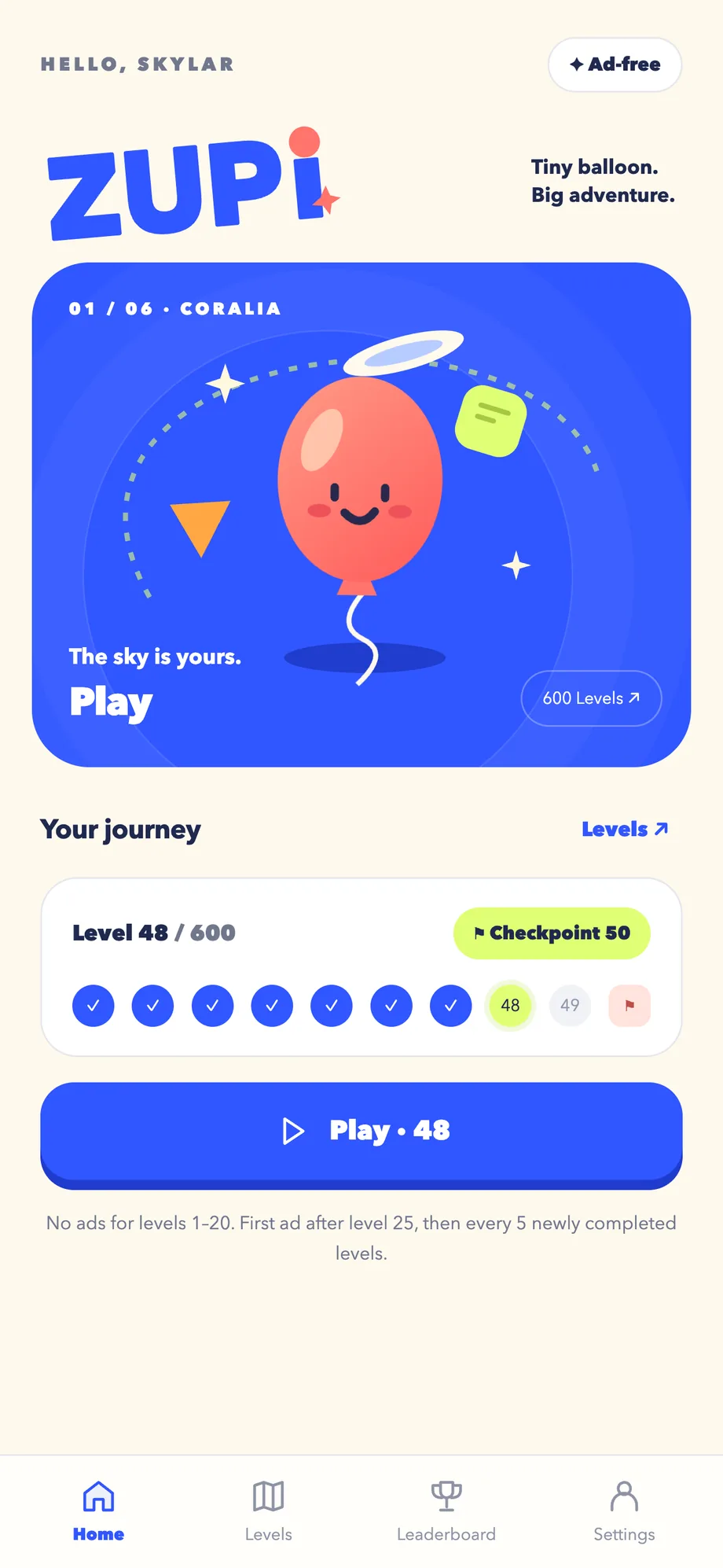

Walk an illustrated journey through a language, one lesson and one spoken exchange at a time. Learn three languages and you have three independent histories, three review queues and three positions on the map — not one profile that overwrites itself when you switch.
Not on the stores yet. A finished interface with no service behind it yet. Not submitted anywhere.
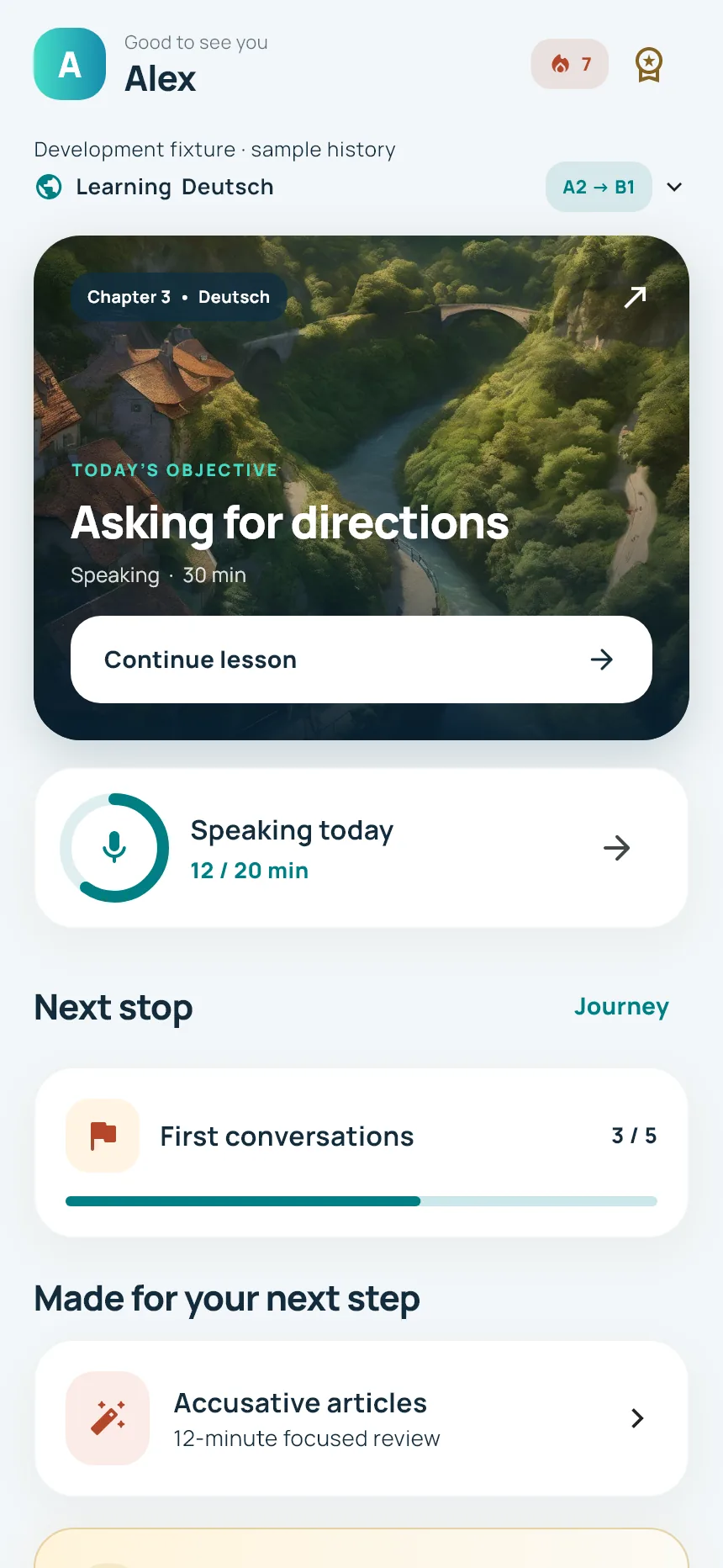
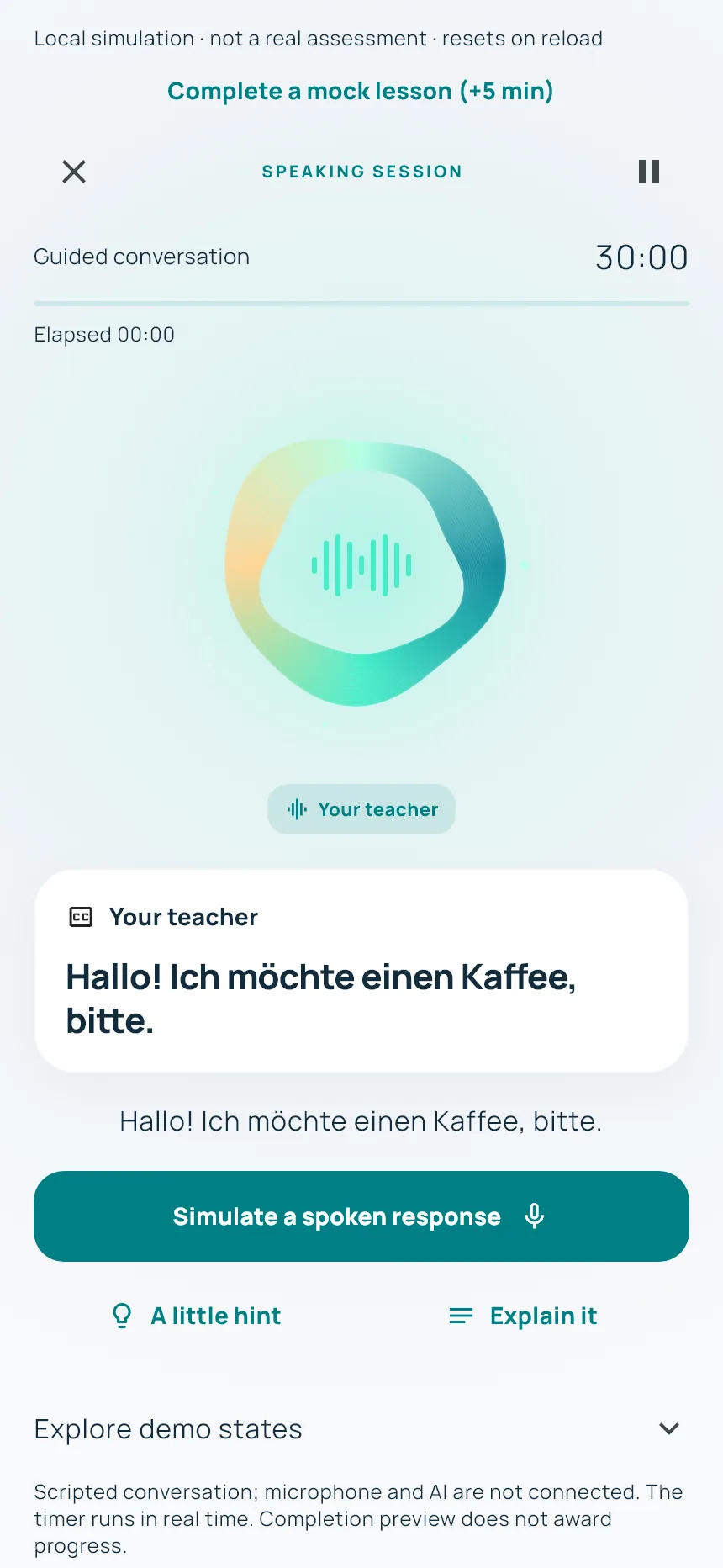
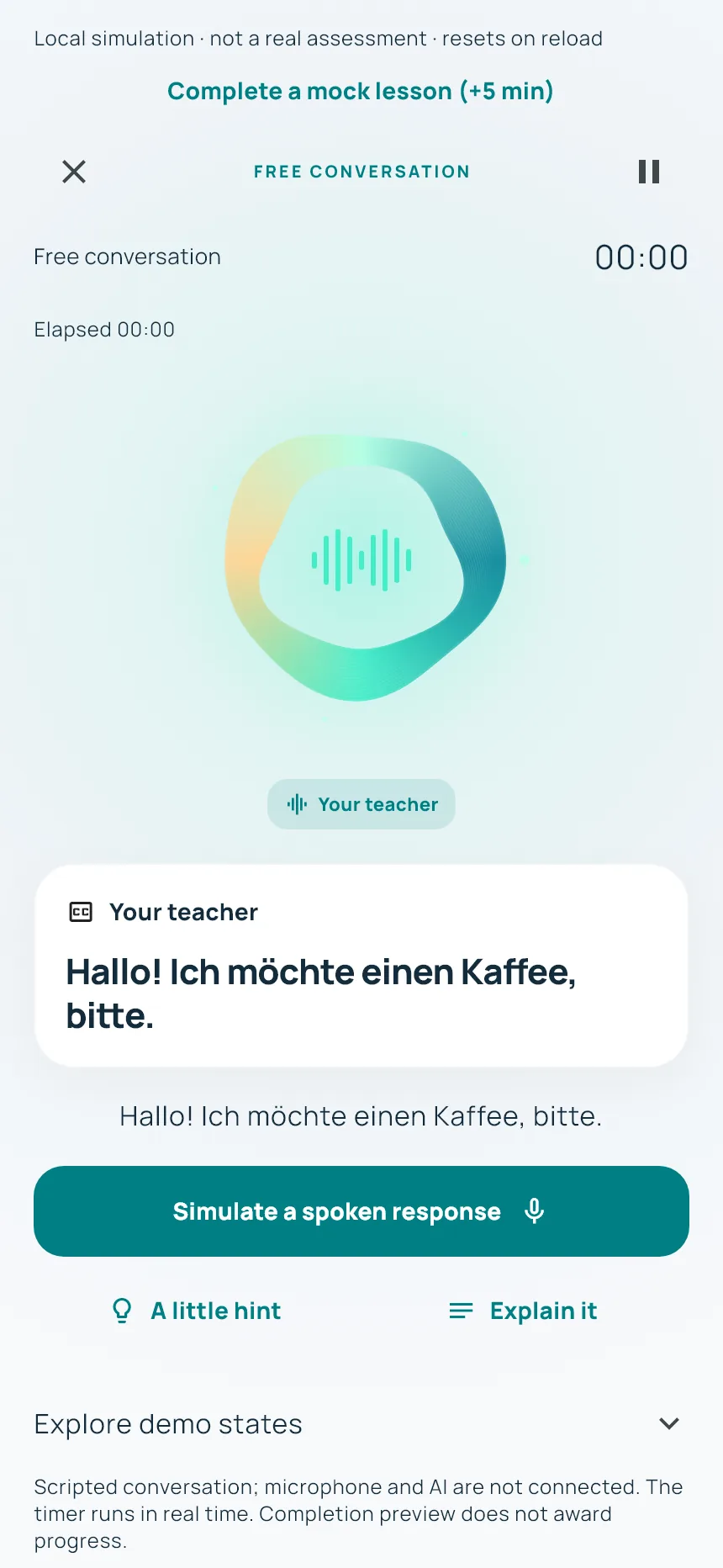
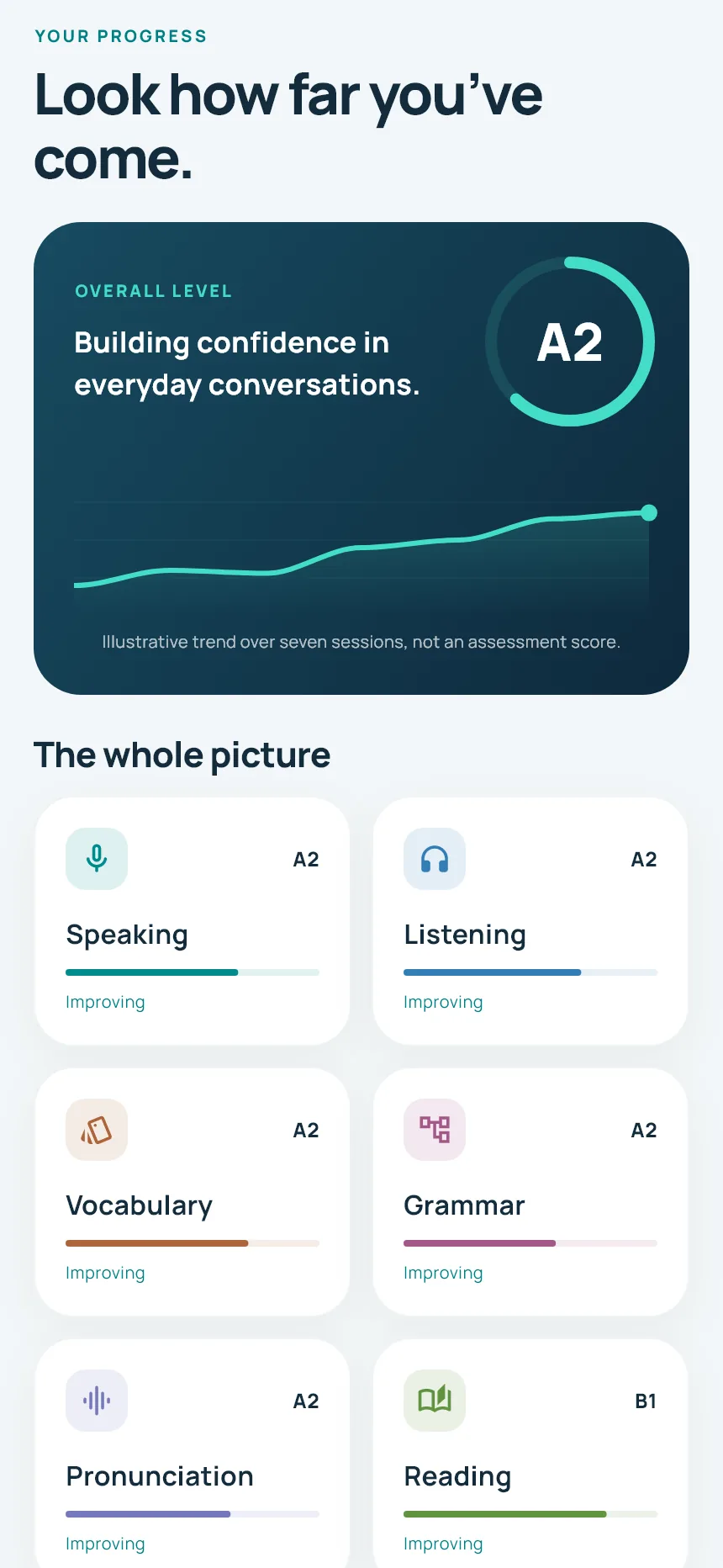
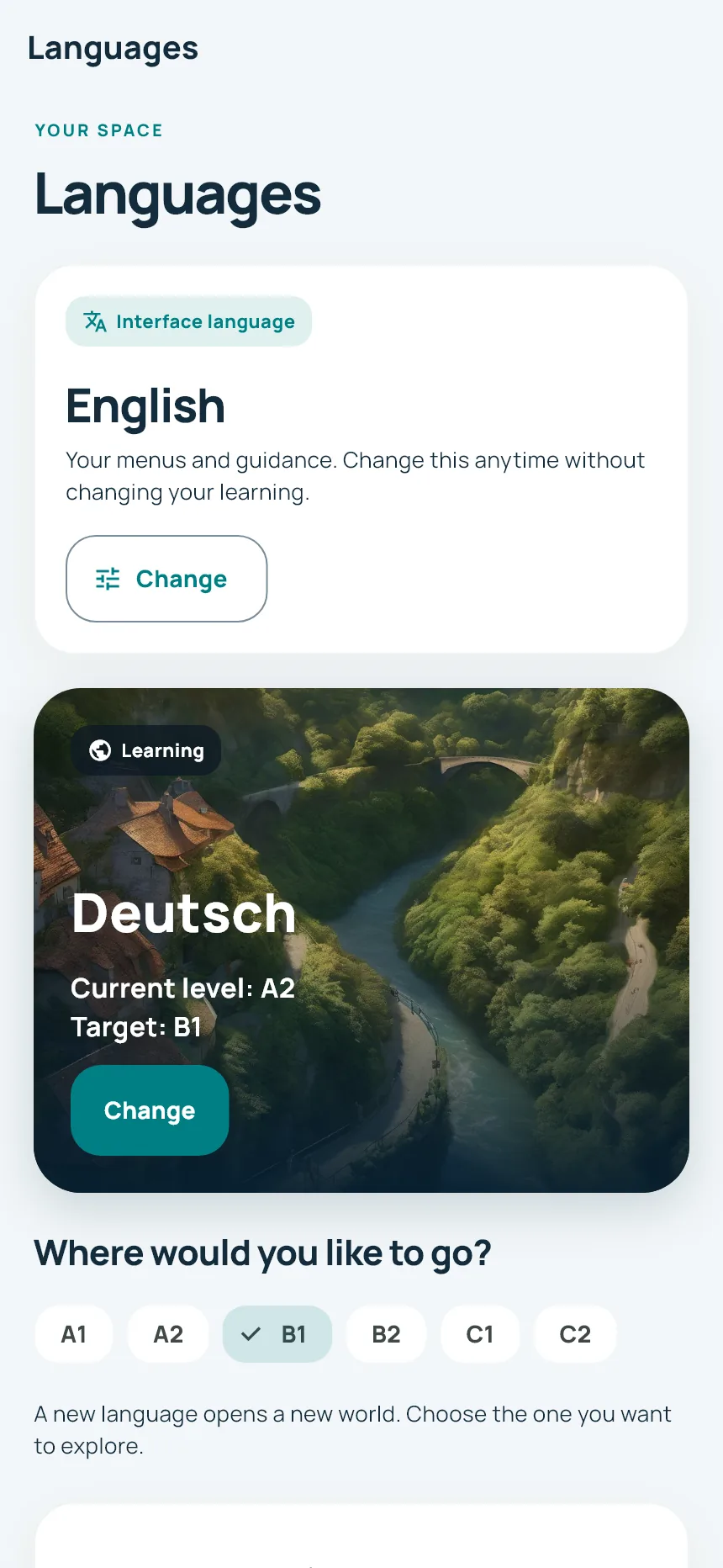
Interactive recreation
The teacher’s words are Vela’s. Every line here is a string from the app’s own lesson script, in whichever of its ten interface languages you choose, and the sentence you assemble is the phrase the app holds for that target language. The lesson flow is rebuilt for the browser, and there is no speech recognition anywhere in it — which is not a limitation of this page. Vela has never run a model, recognised a word or made a network request, and the line the teacher uses to say so is the app’s own.
Understand the one thing Vela does differently: the language it teaches you in is not the language it teaches you.
Why it exists
Most language apps treat a second target language as a setting. Switch from German to Spanish and the streak, the review queue and the sense of where you are all follow you across, which is wrong in a way that only becomes obvious months in: a German word-order mistake should never surface as a Spanish recommendation. Vela is built the other way round, and that decision is what everything else in it has to respect.
What it does
Lessons sit on continuous illustrated regions with their own art, and the map shows what is earned, what is next and what is still closed. Browsing ahead is allowed; it never awards progress.
Ten full message catalogues with identical key sets, enforced by a test. The app opens in the device language on first launch, then in whatever you chose.
Lessons run as a teacher-led exchange with captions, a running timer, pause, resume and an early-exit confirmation — twenty-three distinct states, including every way a lesson can go wrong.
How it was built
The account owns who you are, how the app is written and how it looks. Each target language owns its own level, curriculum position, checkpoints, weaknesses, review queue, speaking minutes and teacher memory. Switching German to Spanish and back restores the German profile exactly, down to the scroll position on the map, because switching selects a profile rather than translating one. A session also pins the language it started in, so a lesson finished late cannot write its result into whichever language you happened to open next.
Where it stands
A complete, verified interface and nothing more. There is no account, no payment, no persistence, no speech recognition and no model: every service behind the screens is a deterministic local stand-in, and the app has never made a network request. It is in the Lab because that is what it is. Its application identifier moved off the Flutter template default on 25 September 2026, so the app is now submittable; nothing has been submitted, and no store record exists against it.
We do not publish download counts, ratings or revenue figures for any product. Nothing here has been on a store long enough for one to mean anything. Privacy information for Vela.
Elsewhere in the studio